The Quiet Strength She Hid: A Wife’s Hidden Past, a Family’s Forgotten Truth, and the Choice That Changed Everything
The folder I placed on the table was thin.
Almost disappointingly thin.
Martin Voss glanced at it and smiled faintly, the kind of smile people gave when they believed they already understood the outcome.
“Mrs. Hale,” he said, “we appreciate your preparation. But I want to remind the court that this case involves significant financial matters. A marriage of this length requires careful legal analysis.”
I looked at him calmly.
“It does.”
My voice carried farther than I expected.
“And that is exactly why I’m here.”
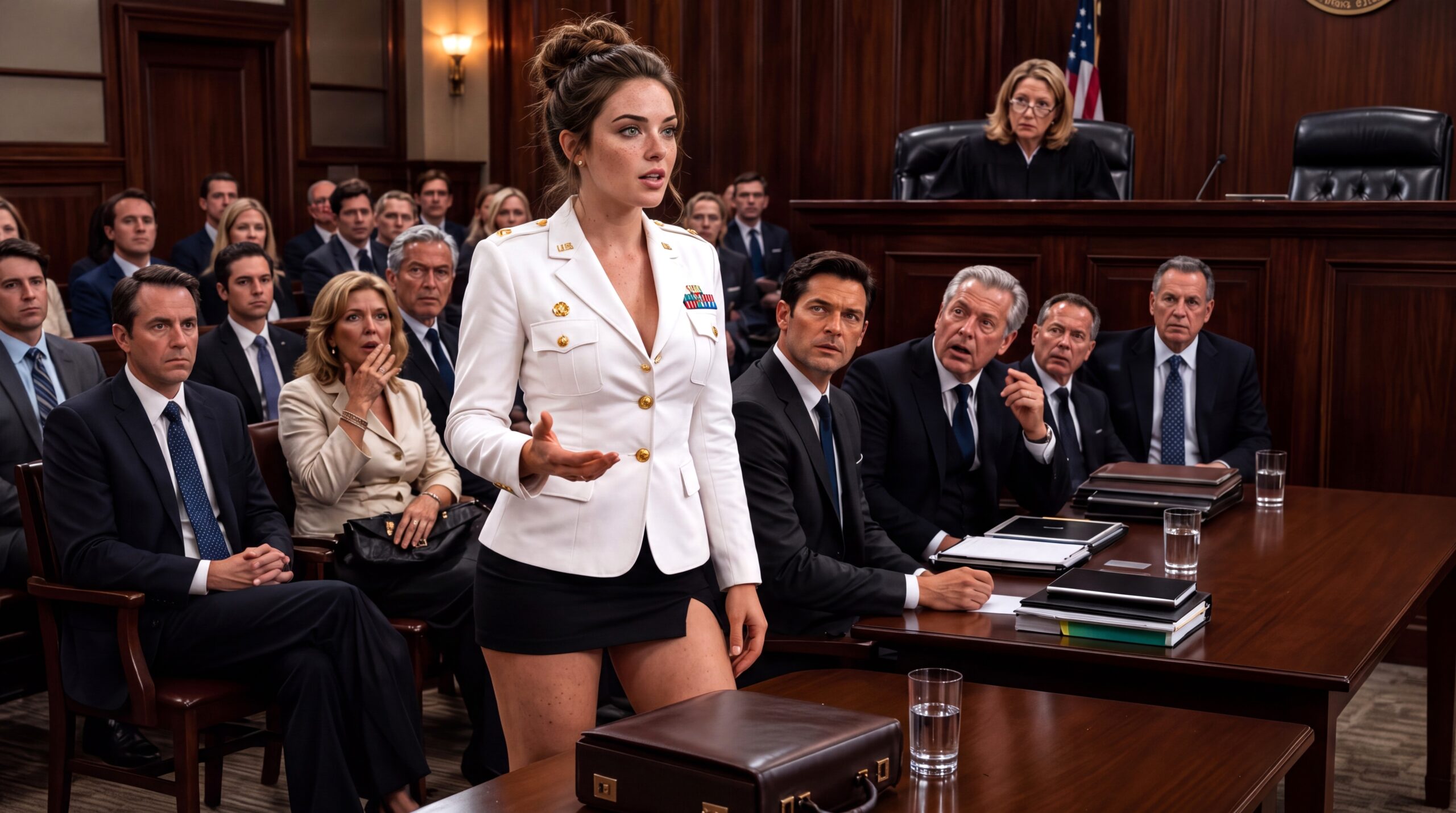
Judge Morrison watched me closely.
“Mrs. Hale, before you proceed, I want to clarify something. You understand that representing yourself means you are responsible for following courtroom procedure?”
“Yes, Your Honor.”
“And you are confident you can do so?”
I paused for only a moment.
“Yes.”
There was something different in the room after that.
Not because anyone knew my past.
Not yet.
But because confidence has a sound.
It is quiet.
It does not need to announce itself.
Martin returned to his seat beside Preston.
My husband avoided looking at me.
That hurt more than I expected.
Not because I wanted him to feel guilty.
Not because I wanted him to regret what he had done.
But because after seven years together, I had expected him to recognize me.
To see the person sitting across from him.
Not just the paperwork.
Not just the wife he had decided no longer fit into his future.
The judge reviewed the documents before her.
“Mrs. Hale, your husband’s petition states that the marriage has been irretrievably broken and that both parties have separate financial interests.”
“Yes, Your Honor.”
“Do you dispute that?”
I looked down briefly.
There were years inside that question.
Dinner conversations.
Long drives.
Family holidays.
The small routines that had quietly built a life.
“No,” I said softly.
Preston looked up.
For the first time that morning, he looked surprised.
I continued.
“I agree that the marriage has reached a point where we need to acknowledge reality.”
Vivian shifted in her seat.
Perhaps she expected anger.
Perhaps she expected a dramatic speech.
Instead, I simply turned the page.
“But I do dispute several statements made regarding my contributions during the marriage.”
Martin stood.
“Your Honor, we object to the characterization of contributions. This is not a business partnership.”
Judge Morrison nodded.
“Mrs. Hale?”
I looked at Martin.
“I agree. Marriage is not a business partnership.”
Then I turned toward the judge.
“But the law recognizes that contributions within a marriage are not limited to income.”
The courtroom became still.
I opened my folder.
Inside were not hundreds of pages.
Not complicated charts.
Just carefully organized records.
“During our marriage, Preston’s company expanded from twelve employees to forty-seven.”
Preston’s expression changed slightly.
Martin looked down at his notes.
“I provided administrative support during that expansion,” I continued. “I organized travel schedules, prepared correspondence, maintained client records, and managed household responsibilities that allowed him to dedicate additional time to his business.”
Martin interrupted.
“Your Honor, those are ordinary marital responsibilities.”
“They are,” I said.
I looked at him.
“But ordinary does not mean invisible.”
That sentence stayed in the room.
Even the judge seemed to pause.
I continued.
“I am not claiming I built his company. Preston built his company.”
For a moment, my husband looked at me.
There was something almost like surprise in his eyes.
Because I was giving him credit.
Even now.
“I am saying that the success he achieved happened during a period when both of us contributed to the life we created.”
Judge Morrison made a note.
Preston’s attorney sat back down.
The first hour passed differently than everyone expected.
There was no shouting.
No accusations.
No attempt to destroy anyone.
Just facts.
Dates.
Documents.
Conversations remembered differently by different people.
That was always the complicated thing about relationships.
Two people could live in the same house and carry completely different versions of the same story.
When the court recessed for lunch, I packed my folder slowly.
I felt eyes following me.
Outside the courtroom, I expected to be alone.
Instead, Preston stopped near the hallway window.
“Amelia.”
I turned.
It was the first time he had said my name in weeks.
Not “Mrs. Hale.”
Not “my wife.”
Amelia.
“What?”
He looked uncomfortable.
A feeling I had rarely seen from him.
“You never told me.”
I knew immediately what he meant.
“The military?”
He nodded.
I leaned against the wall.
“There wasn’t much to tell.”
“There was everything to tell.”
I looked away.
“I was a different person then.”
“No,” he said quietly. “You were the same person.”
That surprised me.
Because I had spent years believing Preston never saw that person.
He rubbed his hand over his jacket sleeve.
“Why didn’t you tell me you were a lawyer?”
I thought about that question.
The honest answer was complicated.
“At first, because I wanted a normal life.”
“And later?”
I swallowed.
“Later because I felt like you loved the version of me who didn’t challenge you.”
The silence between us was heavier than any argument.
Preston looked down.
“I never asked you to become smaller.”
“No.”
I met his eyes.
“You didn’t ask.”
A few seconds passed.
Then his expression changed.
Not dramatically.
Not like someone suddenly realizing everything.
More like someone finally allowing himself to see what had been in front of him.
“I thought you were unhappy.”
“I was.”
The honesty surprised both of us.
“Why?”
I looked through the courthouse window.
Outside, people walked through the sunlight carrying briefcases and coffee cups.
Everyone had a story no one else could see.
“Because I stopped knowing if you loved me,” I said.
Preston didn’t answer.
And for once, I didn’t need him to.
The afternoon session began with financial discussions.
Martin presented his arguments carefully.
He was good at his job.
I respected that.
A strong opponent deserved respect.
He questioned my involvement in Preston’s business.
He questioned whether my work had actual value.
And each time, I answered calmly.
Not like someone trying to win.
Like someone trying to make the truth visible.
Near the end of the day, Martin presented one final document.
“This is a statement from Mr. Hale regarding the division of assets.”
The judge read it.
Then she looked at Preston.
“Mr. Hale, is this your statement?”
“Yes.”
I watched his face.
Something felt strange.
Not wrong.
Just unexpected.
Judge Morrison looked back at the paper.
“Mrs. Hale, do you wish to respond?”
I stood.
“Yes, Your Honor.”
I approached the table.
But before I spoke, I noticed something.
A handwritten note attached to the document.
Not from Martin.
Not from the court.
From Preston.
Three words.
Three words that changed the direction of everything.
I looked at him.
And for the first time that day, I wondered if I had misunderstood why he brought me to court.
The note said:
“She deserves everything.”
I stared at the handwritten note for several seconds.
She deserves everything.
Those three words did not make sense.
Not coming from Preston.
Not after the weeks of silence.
Not after the divorce papers placed beside my coffee cup like a business transaction.
I looked across the courtroom.
Preston was watching me.
For once, there was no confidence in his expression.
No carefully controlled appearance.
Just uncertainty.
Judge Morrison glanced between us.
“Mrs. Hale?”
I closed the folder.
“Your Honor, I would like to request a brief recess before responding.”
The judge studied my face.
Then she nodded.
“Fifteen minutes.”
I walked outside before anyone could stop me.
The courthouse hallway was quieter than the courtroom.
I needed the silence.
I needed space to understand what I was seeing.
A few moments later, Preston appeared.
“You found the note.”
I turned around.
“Yes.”
He looked down.
“I should have explained.”
“That would have been helpful.”
My voice was calm, but he heard the disappointment.
“I wasn’t trying to surprise you.”
“Then what were you trying to do?”
He took a breath.
“I was trying to fix something I should have fixed months ago.”
I waited.
Because after years of marriage, I knew something important about Preston.
He was not someone who avoided problems because he didn’t care.
He avoided them because he believed he could solve everything alone.
It was one of the reasons he became successful.
And one of the reasons our marriage struggled.
“I made mistakes,” he said.
The words were simple.
But they carried weight.
“I thought providing for us was enough. I thought if the bills were paid and the house was comfortable, then I was doing my part.”
I looked at him.
“You forgot I was your partner.”
“Yes.”
He answered immediately.
That almost hurt more.
Because I had spent months wondering if he understood.
“I forgot.”
He leaned against the wall.
“When my father started talking about divorce lawyers and protecting assets, I let myself believe that was the only way to handle things.”
I frowned.
“Your father?”
Preston hesitated.
And that hesitation told me there was more.
“My father was angry when I told him I wanted to separate.”
“That doesn’t sound like him.”
A small, sad smile crossed Preston’s face.
“No. It doesn’t.”
He looked toward the courtroom doors.
“Everyone thinks my father controls everything. The business. The family. Me.”
I said nothing.
“Sometimes I let them believe that because it was easier than admitting I was afraid.”
That surprised me.
Preston afraid.
It was something I had rarely considered.
He had always appeared certain.
Decisive.
Unshakable.
But maybe I had mistaken silence for strength.
“Afraid of what?”
He looked at me.
“Becoming like him.”
The hallway seemed quieter.
“My father spent his entire life measuring people by what they produced. What they earned. What they achieved.”
He swallowed.
“And somewhere along the way, I started doing the same thing.”
I thought about the years behind us.
The dinners where conversations became business meetings.
The vacations interrupted by phone calls.
The moments when I wanted to tell him something important, but he was already thinking about tomorrow.
“I’m sorry,” he said.
I looked away.
An apology could open a door.
But it could not rebuild a house by itself.
“I believe you’re sorry.”
His eyes lifted.
“But I don’t know if sorry is enough.”
He nodded.
“I know.”
That answer mattered.
Because he didn’t argue.
He didn’t defend himself.
He simply accepted it.
When we returned to the courtroom, something had changed.
Not magically.
Not completely.
But enough.
Judge Morrison looked at the document again.
“Mr. Hale, I want clarification. This statement indicates you are not requesting an equal division of certain assets.”
“Yes, Your Honor.”
Martin looked surprised.
“Mr. Hale, we discussed this.”
“I know.”
Preston looked at him.
“But I’ve reconsidered.”
The courtroom became still.
“My wife contributed to our marriage in ways that cannot be measured only by income.”
Vivian’s expression changed.
For the first time, her confidence disappeared.
She had expected a battle.
Instead, she was watching her son admit something she had never heard him say.
That Amelia mattered.
Not because of what she could provide.
Because of who she was.
Judge Morrison looked at me.
“Mrs. Hale, do you agree with this statement?”
I thought carefully.
“Yes and no.”
The judge raised an eyebrow.
I continued.
“I appreciate that Mr. Hale recognizes my contributions. But I don’t want this decision made because he feels guilty.”
Preston looked at me.
“I don’t.”
“Then why?”
He answered quietly.
“Because it’s right.”
That was the first time in a long time I believed him.
The hearing continued.
But the atmosphere had changed.
Not into friendship.
Not into forgiveness.
Not yet.
But into honesty.
After the court session ended, Vivian approached me.
I expected criticism.
Instead, she stood awkwardly.
Something I had never seen from her.
“I owe you an apology.”
I almost didn’t recognize the words.
“Excuse me?”
She looked uncomfortable.
“I judged you.”
A pause.
“I thought because you stayed home, you had done less.”
I said nothing.
She looked at her bracelet.
The same bracelet she had worn when she laughed at me that morning.
“I spent years believing a person’s value came from what people could see.”
Her voice softened.
“I was wrong.”
I studied her carefully.
This was not the dramatic apology people imagined.
No tears.
No grand speech.
Just an older woman admitting she had been mistaken.
“I appreciate you saying that.”
She nodded.
Then she surprised me.
“You know, Preston was happier after he met you.”
I looked away.
“Not lately.”
“No.”
She admitted.
“But that doesn’t mean it wasn’t real.”
Those words followed me home.
That evening, I opened an old storage box.
Inside were memories from another life.
My military identification.
Old case notes.
Photographs.
A version of myself I had packed away because I thought marriage required becoming someone else.
I realized something.
I had not lost Amelia Carter.
I had simply forgotten her.
The next morning, I received an unexpected phone call.
It was from someone I had not spoken to in years.
“Captain Carter?”
I froze.
Almost no one called me that anymore.
“Yes?”
A familiar voice answered.
“It’s General Whitmore. I heard you’re no longer practicing.”
I sat down.
“How did you find me?”
A pause.
“Because someone recommended you.”
My eyebrows lifted.
“Who?”
The answer surprised me.
“Your husband.”
I looked toward the window.
For the first time in months, I smiled.
Not because everything was fixed.
Not because the past disappeared.
But because maybe there was still something worth rebuilding.
Then General Whitmore said something that changed my plans.
“We’re opening a legal advisory program for military families. We need someone who understands both the law and the people behind it.”
I looked at my old files.
At the life I had left behind.
And I realized the question was no longer whether I could return.
The question was whether I wanted to.
For three days, I carried the question with me.
Not the question of whether I could return to legal work.
I already knew the answer.
The years I spent as Captain Amelia Carter had not disappeared. The discipline, the preparation, the ability to listen carefully before speaking — those things were still part of me.
The real question was different.
Who was I now?
For years, I had believed I needed to choose between being a wife and being the woman I had worked so hard to become.
But perhaps that had been the mistake.
Perhaps I had been trying to fit myself into a smaller version of my own life.
On the fourth morning, I sat across from Preston at a quiet coffee shop.
Not our kitchen.
Not our house.
Not a place filled with memories.
A neutral place.
A beginning place.
“I received a job offer,” I told him.
He looked up.
“That’s great.”
I studied his reaction.
No hesitation.
No disappointment.
No attempt to ask how it would affect him.
Just happiness for me.
“It’s with a military family legal program.”
A smile appeared.
“You’d be perfect for that.”
I looked down at my coffee.
“Six months ago, I don’t think you would have said that.”
“No.”
He was honest.
“I probably would have asked how it would affect my schedule.”
The honesty made me smile slightly.
“That sounds like you.”
He nodded.
“I’m trying to become someone better.”
There was something about that sentence.
Not “I have changed.”
Not “I fixed everything.”
Just:
I’m trying.
Real change was not a single moment.
It was a collection of choices.
Small ones.
Repeated ones.
“I don’t know what happens to us,” I said.
“I know.”
His answer was immediate.
“I don’t expect you to come back just because I finally understand something.”
That mattered.
Because love was not about convincing someone to return.
It was about becoming someone worth returning to.
Over the next several months, our lives changed.
Not quickly.
Not perfectly.
But honestly.
I accepted the position with the legal program.
For the first time in years, I walked into an office carrying a briefcase that belonged to me.
Not as Preston Hale’s wife.
Not as someone’s daughter-in-law.
As Amelia Carter.
My work focused on helping military families navigate complicated legal challenges.
Divorce.
Relocation.
Financial issues.
Career transitions.
The same problems I had once seen only through legal documents.
Now I saw the people behind them.
And that changed everything.
Preston changed too.
He began attending counseling.
Not because I demanded it.
Because he wanted to understand himself.
He repaired relationships with people he had neglected.
Including his own family.
One evening, months later, we attended dinner at Vivian and Richard’s house.
It was the first time all of us had sat together without tension.
Richard Hale, who had barely spoken to me during the divorce proceedings, looked across the table.
“Amelia.”
I looked up.
“Yes?”
He cleared his throat.
A small gesture.
But from him, it meant something.
“I owe you an apology.”
I smiled faintly.
“You’re the second person in this family to say that.”
He almost smiled.
“I suppose I’m late.”
“You usually are.”
The entire table laughed.
Even Richard.
And something about that moment felt important.
Not because everyone suddenly became perfect.
Families were never perfect.
But because people were finally willing to admit where they had been wrong.
Later that evening, Vivian showed me an old photograph.
It was Preston as a child.
Standing beside his grandfather.
“He always wanted everyone to be proud of him,” she said.
I looked at the picture.
“I know.”
“He thought success was the only way to earn love.”
That explained more than I expected.
Not excused.
Explained.
There was a difference.
“I think he’s learning another way.”
Vivian nodded.
“I think you helped him.”
I smiled.
“No.”
I looked toward the living room, where Preston was talking with his father.
“He helped himself.”
And I meant it.
A year after the courthouse hearing, Preston and I stood in the same park where we had taken our first photograph together.
The seasons had changed.
So had we.
He held two cups of coffee.
“Still no sugar?”
I laughed.
“You remembered?”
“I remember more than you think.”
I looked at him.
“That was always the problem.”
He nodded.
“I know.”
The silence between us was comfortable now.
Not empty.
Comfortable.
“I miss you,” he said.
The words were simple.
I looked at the trees moving gently in the wind.
“I miss who we were before we stopped listening to each other.”
He took a breath.
“Do you think we can become something new?”
That was the question.
Not whether we could go back.
We couldn’t.
The past was not a place people could live forever.
But maybe two people could build something different from the pieces they had learned from.
“I think,” I said slowly, “if we stop trying to recreate the old marriage, we might have a chance to build a better one.”
He smiled.
A real smile.
The kind I had not seen often enough.
“Would you consider dinner?”
I looked at him.
“Dinner?”
“A first date.”
I laughed.
“After seven years of marriage?”
He shrugged.
“Apparently we have a lot to learn about each other.”
And for the first time in a long time, I felt no pressure.
No expectation.
No fear.
Just possibility.
Years later, people sometimes asked me about that courtroom day.
They expected the story to be about the moment I revealed I was a military attorney.
They expected the surprising part to be that the quiet woman with an empty table had once stood in military courtrooms.
But that was not the most important thing.
The most important thing was what happened afterward.
The courtroom did not save my marriage.
My old career did not save my marriage.
A clever argument did not save my marriage.
What saved us was something much harder.
Two people choosing to see each other clearly.
I learned that strength was not always standing alone.
Sometimes strength was knowing when to speak.
Sometimes it was knowing when to listen.
And sometimes it was having the courage to begin again.
I walked into that courtroom believing I had to prove I was not powerless.
I walked out understanding something much greater.
I had never been powerless.
I had simply forgotten my own voice.
And once I found it again, I neve