Cassandra reached into her bag and pulled out a bundle of envelopes held together with a faded blue ribbon.
Not photographs.
Not medical records.
Letters.
Dozens of them.
Some were creased. Some had bent corners. A few looked as though they had been opened and read so many times the paper had softened along the folds.
But most of them were still sealed.
My name was written across every envelope.
Damon Prescott.
My pulse slowed in a strange, heavy way.
“What are those?”
Cassandra looked at me for several seconds before answering.
“The reason I stopped trying.”
The plane hummed around us.
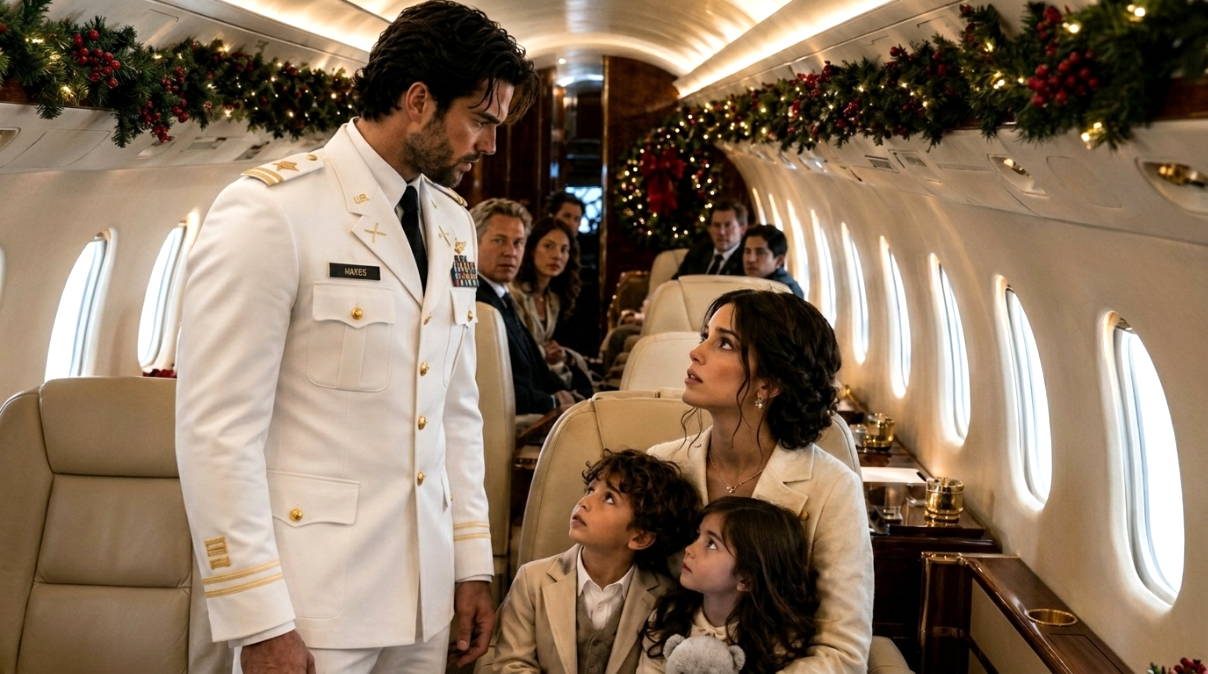
Luke had returned to his red crayon, dragging uncertain circles across the coloring page on his tray table. Violet was rubbing one velvet ear of her stuffed elephant between two fingers.
They were close enough to hear us.
Cassandra noticed my expression and lowered her voice.
“Not here.”
I stared at the envelopes again.
The oldest one had an Oregon postmark from nearly three years earlier.
I recognized Cassandra’s handwriting immediately.
She had always written with a slight rightward slant, as though her words were impatient to reach wherever they were going.
My fingers went cold.
“You wrote to me.”
“I called first.”
“I never got any calls.”
“I know.”
Something in the way she said it stopped me.
Not accusing.
Not bitter.
Simply tired.
Luke held up his coloring page.
“Mama, this reindeer has too many legs.”
Cassandra glanced at it.
“You’ve given him six.”
“He runs extra fast.”
“That seems practical.”
Luke nodded, satisfied.
I watched her smile at him.
For one impossible second, I saw the woman I remembered sitting barefoot on the kitchen counter of our first apartment, eating cereal from a coffee mug because we had packed the bowls before moving day.
Then Violet peeked at me from behind her elephant.
I smiled carefully.
She immediately hid again.
Cassandra noticed.
“She takes time.”
“So did you.”
Her eyes returned to mine.
“No. I used to trust quickly.”
The sentence landed quietly.
That made it worse.
I looked away.
When the twins were occupied again, Cassandra untied the ribbon.
She pulled out one envelope.
“I sent this to your apartment in Seattle.”
I frowned.
“I had already moved.”
“Yes.”
“How would you have known?”
“I didn’t.”
She handed it to me.
Across the front, someone had stamped:
RETURN TO SENDER — NO FORWARDING ADDRESS.
My stomach tightened.
Cassandra removed another.
“This went to Prescott Technologies.”
That one had also been returned.
Another.
And another.
Fourteen envelopes.
Some sent to my office.
Some to an address in Bellevue.
One to a hotel in San Francisco where I had stayed during a conference.
“I called your company,” she said. “At first, they transferred me to your assistant.”
“My assistant would have told me.”
“Which assistant?”
I opened my mouth.
Then stopped.
Three years ago, I had been traveling almost constantly.
I had gone through two executive assistants in six months.
There had been acquisitions, lawsuits, investor meetings, an expansion into Europe.
My life had become a series of airport lounges and conference rooms.
“I don’t remember.”
“I do.”
Cassandra’s voice remained soft.
“Her name was Melinda.”
I remembered her.
Barely.
Efficient. Young. Overwhelmed. She had resigned after four months.
“What did you tell her?”
“That I needed to speak to you about something personal.”
“And?”
“She said personal calls weren’t being connected during the restructuring.”
I closed my eyes.
I had made that rule.
Not specifically.
Not maliciously.
But I had made it.
During the months after Cassandra left, I had become obsessed with work.
I had told my staff that anything unrelated to company operations could wait.
No interruptions.
No old friends.
No family acquaintances.
No personal requests unless they were emergencies.
At the time, it had seemed disciplined.
Necessary.
I had wanted silence.
Apparently, I had received exactly what I asked for.
Cassandra slid another envelope from the stack.
“This one wasn’t returned.”
I stared at it.
The postmark was from five months after our breakup.
The address was Prescott Technologies.
My office.
There was no return stamp.
“You think I received this?”
“I thought you did.”
“I didn’t.”
She held my gaze.
“I know that now.”
The certainty in her tone unsettled me.
“How?”
“Because after Luke and Violet were born, I sent another letter.”
She found it.
“I included photographs.”
My chest tightened.
“Baby pictures?”
“Yes.”
“You sent me pictures of them?”
“Yes.”
“And I never—”
My voice broke.
I looked down before the children could see my face.
For years, I had negotiated deals in rooms designed to intimidate people.
I had watched companies collapse.
I had fired friends.
I had spoken at my father’s funeral without losing control of my voice.
But the idea that photographs of my newborn children had existed somewhere with my name written on them almost undid me.
“Where did they go?”
“That’s the question I couldn’t answer.”
The seatbelt sign illuminated again.
Cassandra gathered the letters quickly.
The captain announced that we would be passing through another patch of mild turbulence.
I returned to my seat only after Cassandra promised we would keep talking once we landed.
Back in first class, I stared at nothing.
My phone remained useless at thirty thousand feet, which felt strangely appropriate.
For once, the world I had built could not reach me.
No assistants.
No board members.
No investors.
No lawyers.
Just the engines, the clouds, and everything I had failed to know.
The woman beside me had been reading a mystery novel since takeoff.
She closed it.
“You look like you’ve just discovered the butler did it.”
I glanced at her.
She was probably seventy, elegant without trying, with silver hair gathered loosely at the back of her neck.
“I discovered I have two children.”
Her eyebrows rose.
“On the airplane?”
“Three rows behind coach.”
“That certainly beats my book.”
Normally, I would have ended the conversation.
Instead I laughed.
One short, disbelieving sound.
She studied me.
“Do they know?”
“No.”
“That you’re their father?”
“I don’t think so.”
“Then you have one job tonight.”
“What’s that?”
“Don’t make your confusion their burden.”
I looked at her.
“You don’t know anything about the situation.”
“No.”
She reopened her novel.
“But I raised four children and helped raise seven grandchildren. Adults always believe children need answers. Most of the time, they need steadiness first.”
Then she went back to reading.
I stared through the dark window.
Steadiness.
It was not a word anyone had used to describe me.
Successful.
Driven.
Relentless.
Demanding.
Visionary, occasionally, when magazines were feeling generous.
But never steady.
My father had taught me that motion was survival.
After my baby sister, Emily, died, he worked more.
After my mother left two years later, he worked even more.
By sixteen, I had learned that grief could be converted into productivity.
By thirty-two, I had turned it into a publicly traded company.
I wondered what Luke and Violet would eventually learn from me.
The thought frightened me more than any hostile acquisition ever had.
When the seatbelt sign disappeared, I returned to row twenty-eight.
This time, Luke smiled when he saw me.
“Angry man.”
Cassandra covered her mouth.
I raised an eyebrow.
“Is that my name now?”
Luke considered this.
“What is your name?”
“Damon.”
He tried it.
“Day-mun.”
“Close.”
Violet whispered something into Cassandra’s shoulder.
“What did she say?” I asked.
Cassandra smiled faintly.
“She says your shoes are shiny.”
I looked down.
Italian leather.
Completely absurd beside Luke’s dinosaur sneakers.
“Tell her thank you.”
“You can tell her.”
I leaned slightly toward Violet.
“Thank you.”
She studied me.
Then held the elephant out a few inches.
“Ellie.”
I felt something shift inside me.
“Hello, Ellie.”
Violet smiled.
The dimple appeared.
Left cheek.
Mine.
Cassandra saw me notice.
Her eyes softened.
“They both have it.”
I sat beside her again.
“I need to understand.”
“I know.”
“Start with why we broke up.”
Her expression changed.
“You remember.”
“I remember what I thought happened.”
Three years earlier, Cassandra had been offered a teaching position at a small community college outside Portland.
I had called it temporary.
A distraction.
Something she could do until she decided what she really wanted.
She had stared at me across our kitchen table.
“I already know what I want.”
I had laughed.
Not cruelly.
That was almost worse.
Carelessly.
I was expanding Prescott Technologies into three states and preparing our first major healthcare investment.
I thought everyone’s life should organize itself around momentum.
Cassandra wanted dinners together.
Sundays without laptops.
A place where we knew our neighbors.
Children eventually.
I wanted children too.
Someday.
That word had become my answer to everything she loved.
Someday.
When things settled down.
Someday.
After the next funding round.
Someday.
When the company didn’t need me constantly.
She left on a rainy Tuesday.
I worked until midnight.
“I thought you chose Portland over us,” I said.
Cassandra looked at me for a long moment.
“I chose a life that had room for me.”
There was no anger in it.
Only truth.
I nodded.
“I understand that now.”
“Do you?”
“I’m beginning to.”
She looked toward the children.
“Three weeks after I left, I found out I was pregnant.”
“Why didn’t you drive back?”
“I almost did.”
“Almost?”
“I sat in my car outside your building.”
I stared at her.
“When?”
“November eighth.”
The date meant nothing to me at first.
Then memory surfaced.
Seattle.
Rain.
The medical division launch.
I had worked twenty-one hours that day.
“You were there?”
“For nearly two hours.”
“Why didn’t you come inside?”
“I called you.”
I felt cold again.
“No.”
“You answered.”
I stared at her.
“I didn’t.”
“Yes, Damon. You did.”
She wasn’t accusing me.
She looked confused.
Certain, but confused.
“You said you couldn’t talk. I told you it was important. You said everything felt important to everyone except you.”
My stomach dropped.
That sounded like something I might have said.
Exactly like something I might have said.
But I remembered no call from Cassandra.
“Did you say your name?”
“Yes.”
“Did you tell me you were pregnant?”
“I tried.”
“What exactly happened?”
She thought carefully.
“You sounded distracted. There were people talking behind you. You said you had five minutes before a presentation. I said I needed you to listen to me. You said, ‘Cass, I can’t do this again.’”
I closed my eyes.
Something flickered.
A hotel conference room.
A phone pressed against my ear.
Someone handing me revised numbers.
But the memory would not settle.
Cassandra continued.
“I asked whether you meant us.”
“And?”
“You said, ‘Whatever this is, I have nothing left to give it.’”
My hands went numb.
“That sounds awful.”
“It was.”
“Cassandra, I don’t remember saying it.”
“I believe you.”
That surprised me.
“Why?”
“Because I learned something two weeks ago.”
Luke dropped his crayon again.
I caught it before it reached the floor.
He laughed.
“Fast.”
“Very.”
I handed it back.
Cassandra waited until he returned to his reindeer.
Then she leaned closer.
“That phone call is why I’m going to Denver.”
I stared at her.
“What?”
“My mother died in September.”
I looked at her sharply.
“Elaine?”
She nodded.
I remembered Cassandra’s mother as warm, practical, slightly suspicious of expensive watches.
She had once told me anyone who needed a watch worth more than her car was probably late too often.
“I’m sorry.”
“Thank you.”
“Why didn’t anyone tell me?”
Cassandra gave me a sad look.
“How would we have?”
That answer followed me into silence.
She continued.
“Mom kept everything. Receipts. Christmas cards. Appliance manuals from 1997. After she died, my brother and I started clearing her house.”
“You have a brother?”
“Half brother. Miles. He moved to Denver years ago.”
I vaguely remembered hearing his name.
“I found an old box in Mom’s desk.”
Her eyes drifted toward the overhead compartment as though she could see through it.
“Inside were copies of the letters I sent you. And a note she wrote to herself.”
“What kind of note?”
“She had started recording dates after I became pregnant. Doctor appointments. Insurance calls. Things she wanted to remember.”
Cassandra swallowed.
“One entry said, ‘Called Prescott office. Spoke with R. He says Damon knows.’”
“R?”
“That’s all she wrote.”
My thoughts moved immediately through names.
Employees.
Executives.
Assistants.
Lawyers.
Three years ago, dozens of people had access to my schedule.
“Who was R?”
“I don’t know.”
“What did he say I knew?”
“I assume the pregnancy.”
“Assume?”
“That’s why I’m going to Denver.”
She rubbed her thumb along the edge of Ellie’s stuffed ear.
“Miles has the rest of Mom’s papers. He found another file last week. Something connected to Prescott Technologies.”
“What kind of file?”
“He wouldn’t explain over the phone.”
“Why not?”
“He said he didn’t want to make accusations without showing me the documents.”
My old instincts awakened.
Information.
Sequence.
Evidence.
But for once, the questions were not about money.
“Did your mother contact my company?”
“Yes.”
“Repeatedly?”
“I think so.”
“You never told me this before?”
“I didn’t know until after she died.”
I leaned back.
A thought occurred to me.
“Cassandra, when you believed I knew about the twins…”
Her gaze met mine.
“You thought I chose not to come.”
“Yes.”
The word was almost inaudible.
I looked at Luke.
He was drawing antlers now.
Violet had fallen asleep against Cassandra’s shoulder.
“You thought I knew they existed for nearly three years.”
“Yes.”
“And you still never came after me legally?”
Her expression tightened, though not in anger.
“I wasn’t interested in punishing you.”
“I didn’t say—”
“I know what you meant.”
She adjusted Violet carefully.
“I had a stable job. Mom helped. Later I moved into curriculum development and worked remotely. Money was tight sometimes, but the children were safe. Happy. Loved.”
“You could have asked me for support.”
“I believed you had already answered.”
That sentence stayed with me.
I had built my entire adult life around the idea that decisions were clean.
Make a choice.
Accept the result.
Move forward.
But maybe the worst decisions were the ones you never realized you were making.
I looked at Cassandra.
“What do Luke and Violet think about their father?”
“They know they have one.”
“That’s a start.”
“They know he lives far away.”
“Do they know my name?”
“No.”
“Why?”
“Because I never wanted them to learn about you through my disappointment.”
I stared at her.
She continued.
“When they were older, I planned to explain carefully. I wanted them to know that adults can fail each other without that failure belonging to the children.”
Something in my chest tightened painfully.
“You protected my place in their lives even when you thought I abandoned them.”
“I protected theirs.”
That distinction mattered.
I nodded.
The flight attendant appeared with water.
Luke asked for apple juice.
When she returned, she gave him a plastic cup with a lid.
He held it toward me.
“Cheers.”
I blinked.
Cassandra smiled despite herself.
I lifted my water.
“Cheers.”
Our cups tapped softly.
Violet woke fifteen minutes later.
She watched me longer this time.
Then she held out Ellie again.
I touched the elephant’s nose.
Violet giggled.
Cassandra looked away quickly.
I pretended not to notice the tears in her eyes.
We spent the final hour of the flight talking in fragments.
Nothing dramatic.
Nothing clean.
I learned Luke hated peas but loved broccoli, which seemed unreasonable.
Violet loved strawberries and music.
Both children had been born six weeks early.
My heart stopped when Cassandra told me that.
“They were okay?”
“They were small.”
“How small?”
“Luke was four pounds, three ounces. Violet was three pounds, eleven.”
I couldn’t speak.
“They spent time in neonatal care?”
“Three weeks.”
The acquisition waiting in Denver suddenly became something else.
Merritt Systems.
Neonatal diagnostics.
The entire reason I had pursued the company was because I remembered standing outside a hospital nursery when I was eight years old, watching doctors try to save Emily.
Now my own children had begun their lives under similar fluorescent lights.
“Were you alone?”
“No.”
Cassandra understood what I meant.
“Mom was there. Miles flew in. My friend Naomi practically moved into the hospital.”
“And I was…”
I tried to remember where I had been.
Cassandra did.
“Singapore.”
I looked at her.
“How do you know?”
“There was an article about you.”
Of course there was.
Prescott Technologies had announced its Asian expansion the same week my children were born.
I remembered champagne.
Photographs.
A ballroom overlooking Marina Bay.
I had considered it one of the greatest weeks of my career.
The plane began descending.
Denver appeared below us, a vast grid of lights beneath the winter darkness.
Christmas Eve.
10:47 p.m.
My phone reconnected.
Twenty-three messages arrived instantly.
The acquisition team.
My CFO.
The board chairman.
Our outside counsel.
Calder increased their offer.
Merritt wants signatures by 11:30.
Car is waiting at arrivals.
Another message appeared.
From my chief operating officer, Rebecca Sloan.
Damon, I know this deal matters personally, but if you don’t get here in the next thirty minutes, the board may proceed without you. Call me immediately.
Three hours ago, I would already have been dialing.
Instead, I looked at Cassandra wrestling coats onto two sleepy toddlers.
“Do you have transportation?”
“Miles is meeting us.”
“Where?”
“Passenger pickup.”
“I’ll come with you.”
She looked surprised.
“What about your meeting?”
“I have forty-three minutes.”
“That sounds important.”
“It is.”
“So go.”
I looked at Luke.
He had fallen asleep sitting upright, his red crayon still tucked inside one fist.
“No.”
Cassandra’s expression changed.
“Damon.”
“I spent three years going whenever work called.”
“That doesn’t mean you prove something by abandoning your responsibilities tonight.”
I stared at her.
There it was.
The Cassandra I remembered.
She had never been impressed by grand gestures.
“Then what do you suggest?”
“Walk us to baggage claim. Meet the children’s uncle. Then go do whatever you have to do.”
“And after?”
“Miles lives in Lakewood.”
She hesitated.
“You can come tomorrow morning.”
“Christmas morning?”
“If you want.”
I could not remember the last time four words had meant so much.
“I want.”
We disembarked slowly.
First class emptied before the rear rows.
For the first time in years, I let everyone pass me.
When Cassandra finally reached the jet bridge, Violet was sleeping in her arms and Luke was stumbling beside her.
Without asking, I took Luke’s small backpack.
He noticed.
“That’s mine.”
“I’m borrowing it.”
“It has dinosaurs.”
“I’ll be careful.”
“Very careful.”
“Yes, sir.”
He seemed satisfied.
At baggage claim, a tall man in a worn denim jacket lifted his hand.
“Cass.”
Miles Hayes looked nothing like Cassandra.
Dark hair. Broad shoulders. Thoughtful brown eyes.
He hugged his sister, kissed Violet’s forehead, then crouched beside Luke.
“Hey, buddy.”
“Uncle Miles!”
Luke launched himself forward.
Miles caught him.
Then he looked at me.
His expression became unreadable.
“Damon Prescott.”
“Apparently.”
Cassandra sighed.
“Miles.”
“What?”
“Christmas Eve.”
“I’m being polite.”
He extended his hand.
I shook it.
His grip was firm but not theatrical.
“I suppose we have a lot to discuss,” I said.
“We do.”
He looked at Cassandra.
“You told him?”
“On the plane.”
“All of it?”
“Not the papers.”
Miles’s gaze returned to me.
“So you really didn’t know.”
“No.”
He studied me for another second.
“I believe you.”
That startled me more than hostility would have.
“Why?”
“Because I found something.”
Cassandra went still.
“What?”
Miles glanced at the twins.
“Not here.”
My phone rang.
Rebecca.
Again.
I silenced it.
Miles noticed.
“You’ve got somewhere to be.”
“Yes.”
“Go.”
“I’m coming to your house afterward.”
Cassandra frowned.
“Damon, it’ll be midnight.”
“I won’t wake the children.”
Miles looked at his sister.
Then at me.
“Come after your meeting.”
He gave me the address.
I helped load the bags into his SUV.
Luke was half asleep when Cassandra buckled him into his car seat.
Before she closed the door, he looked at me.
“Day-mun?”
“Yes?”
“Are you coming Christmas?”
My throat tightened.
“If your mom says it’s okay.”
Luke looked at Cassandra.
She looked at me.
Then she nodded.
“Yes.”
Luke smiled.
“Bring crayons.”
“I can do that.”
“Red.”
“Red crayons.”
He closed his eyes.
I watched the SUV disappear into the traffic before entering the black sedan waiting for me.
Rebecca called again.
This time, I answered.
“Where are you?”
“Leaving the airport.”
“We have thirty-four minutes.”
“I know.”
“You sound strange.”
“I found out I have children.”
Silence.
Then:
“What?”
“Twins.”
Another silence.
Rebecca had worked beside me for nine years.
She was one of the few people who knew better than to fill empty space.
Finally she said, “Do you need me to postpone this?”
“Can you?”
“Merritt can walk.”
“Then no.”
“Damon—”
“The deal still matters.”
I looked through the window at Christmas lights passing in blurred streaks.
“But not for the reason it did this morning.”
We reached the hotel at 11:18.
The acquisition team occupied a conference room overlooking downtown Denver.
Ten people sat around the table.
Contracts were arranged in neat stacks.
My CFO, Eric Lang, approached immediately.
“Calder offered eight hundred and five.”
“I heard.”
“Merritt will take seven ninety from us because they prefer our clinical infrastructure, but we have to approve the integration budget.”
“How much?”
“Forty-two million over projection.”
Rebecca entered behind me.
I removed my coat.
Normally, this was where I became most alive.
Pressure narrowed everything.
Numbers became clean.
People became predictable.
Tonight, I kept seeing Luke’s crayon.
Violet’s elephant.
Three weeks in neonatal care.
I opened the projections.
“What gets cut to make the integration budget?”
Eric hesitated.
“Several things.”
“What things?”
“The employee retention package.”
“No.”
He blinked.
“Damon, we’ve discussed—”
“Not anymore.”
Rebecca watched me carefully.
“The relocation guarantees?” Eric asked.
“No.”
“Then we reduce R&D.”
“No.”
Eric lowered his voice.
“We cannot preserve everything.”
I looked at the numbers.
For years, I had treated every acquisition as a machine.
Remove inefficiencies.
Combine departments.
Extract value.
Tonight I imagined hundreds of families receiving Christmas Eve phone calls telling them their jobs had disappeared.
“I don’t want a deal that only works after we frighten half the people who built the company.”
Eric stared at me.
“That is not how you usually approach acquisitions.”
“I know.”
I turned toward Rebecca.
“What if we lower the immediate margin target and extend integration to eighteen months?”
She pulled the model closer.
“We could.”
“The board won’t like it,” Eric said.
“They don’t have to like every quarter.”
He almost smiled.
“Who are you?”
“At the moment, I’m trying to find out.”
At 11:41, we signed.
Not the deal we had planned.
A better one, I thought.
Or perhaps simply one I could live with.
When the room erupted in exhausted applause, I felt almost detached from it.
Seven hundred and ninety million dollars changed hands on paper.
And all I could think about was buying red crayons.
At 12:16 a.m., I stood outside a twenty-four-hour pharmacy staring at an entire aisle of art supplies.
I bought six boxes.
Then realized that was ridiculous.
Then bought them anyway.
I also bought a stuffed giraffe for Violet.
Halfway to the register, I put it back.
Ellie already existed.
I was not going to arrive in their lives trying to compete with everything they already loved.
At 12:43, I reached Miles’s house.
Only the porch light was on.
He opened the door before I knocked.
“Kids are asleep.”
“I assumed.”
I held up the pharmacy bag.
“Crayons.”
He smiled faintly.
“You actually did it.”
“I said I would.”
“That’s a good place to start.”
Cassandra sat at the kitchen table in borrowed pajamas and a cardigan.
Three mugs stood between us.
One chair was empty.
Mine.
I sat.
Miles placed a manila folder on the table.
“This was in Mom’s things.”
Cassandra stared at it.
“You didn’t show me this.”
“I found the last piece this afternoon.”
“What piece?”
Miles opened the folder.
Inside were photocopies of correspondence.
Prescott Technologies letterhead.
My logo.
My company.
One document was a typed record of a phone message.
Caller: Cassandra Hayes.
Subject: Personal.
Urgency: High.
Beneath it, in handwritten ink:
Do not forward. Per R.P.
My breathing changed.
“R.P.?”
Miles slid another page toward me.
An internal directory.
One name had been circled.
Richard Prescott — Senior Counsel, Executive Affairs.
My uncle.
My father’s younger brother.
The man who had spent twelve years helping me build the company.
The man who had attended every Christmas of my childhood.
The man who had told me, after Cassandra left:
Some people love the version of you they think they can change.
I stared at the page.
“No.”
Cassandra said nothing.
Miles placed a final envelope in front of me.
Unlike the others, this one had been opened.
My name was written across it.
Inside was a photograph.
Two newborn babies lying side by side beneath hospital blankets.
Luke.
Violet.
On the back, Cassandra had written:
They arrived early, but they are strong. I hope someday you will want to know them.
My vision blurred.
Beneath the photograph was a routing slip from Prescott Technologies.
Received by executive offices.
Signed.
R. Prescott.
I looked at Cassandra.
Then Miles.
“Richard knew.”
Miles nodded slowly.
“And according to one more document,” he said, “he didn’t just know about the twins.”
He turned over the final sheet.
It was a handwritten note from Cassandra’s mother.
Only two lines.
Richard Prescott called again. Says Damon believes Cassandra does not want contact. Says it is better for everyone if we stop reaching out.
Below that, Elaine Hayes had written one final question.
But why would he decide that for them?
I read it twice.
Then a third time.
Outside, snow began falling softly across the dark street.
For three years, Cassandra had believed I had chosen silence.
For three years, I had believed she had chosen a life without me.
Between us stood one man who had apparently decided what each of us should know.
But as I looked at Cassandra across Miles’s kitchen table, another question seemed even more important.
I did not call Richard that night.
That surprised Cassandra.
It surprised me too.
Three years earlier, I would have demanded answers immediately.
I would have called lawyers, ordered records preserved, and summoned Richard into a conference room before sunrise.
Instead, I sat at Miles’s kitchen table while snow gathered on the windowsill and listened to the quiet hum of a refrigerator covered in children’s drawings.
Cassandra folded the hospital photograph back into its envelope.
“What are you going to do?”
“I don’t know yet.”
Miles leaned against the counter.
“That may be the first sensible thing you’ve said tonight.”
Cassandra gave him a look.
“What?”
“He owns six boxes of red crayons.”
I glanced at the pharmacy bag.
“I panicked.”
For the first time since the plane, Cassandra laughed.
Not politely.
Actually laughed.
The sound lasted only a few seconds, but something inside me loosened.
“I’m serious,” I said. “There were too many choices.”
“You run a technology company,” Miles said.
“That doesn’t prepare a person for crayons.”
“Apparently not.”
Cassandra shook her head.
Then the room became quiet again.
I looked at the photograph.
“Richard helped raise me after my mother left.”
Cassandra’s expression softened.
“I know.”
“My father trusted him completely.”
“Did you?”
“Yes.”
The answer hurt.
Richard had been the easier Prescott.
My father, William, believed affection weakened discipline.
Richard remembered birthdays.
He attended school events when my father was traveling.
He taught me to drive.
When Emily died, Richard was the one who sat beside me on the hospital floor while adults spoke in whispers behind closed doors.
Years later, when I founded Prescott Technologies, Richard invested the first serious money.
He did not simply work for me.
He belonged to the architecture of my life.
“I want to know why,” I said.
Cassandra looked at the children’s drawings on the refrigerator.
“Knowing why may not make it better.”
“No.”
“But it may make it understandable.”
“That’s what I’m hoping.”
Miles poured more coffee.
“Mom wrote about him more than once.”
I looked up.
“How many times?”
“Seven entries that we found.”
“Can I see them?”
He brought another notebook from the counter.
Elaine’s handwriting filled the pages.
Practical entries about groceries and dentist appointments sat beside notes about Cassandra’s pregnancy.
March 14 — Cass worried but babies healthy.
March 19 — Called D.P. office. Transferred twice.
March 22 — Richard P. returned call. Says Damon under enormous pressure.
Then:
April 3 — Richard says Damon knows. Says he does not want involvement. Cass devastated.
Cassandra looked away.
I felt something sharp in my chest.
“I never said that.”
“I know.”
Her voice was gentle.
That almost made it harder.
Miles pointed to another page.
May 11 — R.P. says legal arrangements can be made privately if needed. Told him no. Cass wants no money.
My jaw tightened.
“Legal arrangements?”
“Mom never explained,” Cassandra said.
I read further.
July 2 — Babies early. Sent photos to Damon’s office.
July 9 — Richard called. Says photos received. Says Damon asks us to respect his wishes.
I stopped.
The kitchen disappeared for a moment.
Not dramatically.
Simply receded.
Because I knew where I had been on July ninth.
Tokyo.
Presenting at a medical technology summit.
Richard had been there too.
I remembered breakfast that morning.
He had sat across from me reading newspapers on a tablet.
I had told him I was tired.
He had told me success required accepting that some parts of life would be lost along the way.
At the time, I thought he was talking about sleep.
I closed the notebook.
“I’m going to speak with him tomorrow.”
“Today,” Miles corrected.
I looked at the clock.
1:27 a.m.
Christmas morning.
Cassandra rubbed her eyes.
“You should sleep.”
“I have a hotel.”
“You’re forty minutes away.”
“I’ll manage.”
Miles glanced at the snow.
“You can take the couch.”
I looked at him.
“You met me four hours ago.”
“I’ve met worse people.”
“Thank you, I think.”
“You’re also Luke and Violet’s father.”
He said it naturally.
No ceremony.
No judgment.
Just fact.
The words settled differently this time.
Their father.
Cassandra stood.
“There are blankets in the hall closet.”
She paused.
“And Damon?”
“Yes?”
“Tomorrow morning, don’t tell them.”
I understood immediately.
“About me?”
“Not yet.”
I nodded.
“Okay.”
She seemed relieved.
“I want them to know. But I want us to figure out how first.”
“Together?”
Her eyes met mine.
“Yes.”
It was the first time since the plane that she had used that word about us.
Not romantically.
Not as a promise.
But it mattered.
I slept badly.
Not because the couch was uncomfortable.
Because at 4:12 a.m., I woke to whispering.
“Mama?”
A small figure stood in the hallway.
Luke.
Cassandra appeared behind him.
“What is it, sweetheart?”
He pointed at me.
“Day-mun is sleeping in Uncle Miles’s house.”
“Yes.”
“Why?”
Cassandra hesitated.
I kept my eyes closed.
“Because it was snowing,” she said.
Luke considered this.
“Is he staying Christmas?”
“For breakfast.”
Another pause.
“Okay.”
Then his small feet padded away.
I lay awake afterward thinking about how simple childhood trust could be.
An adult was there because it snowed.
He would stay for breakfast.
Okay.
No suspicion.
No complicated history.
Just acceptance until given a reason otherwise.
At seven, I woke to something touching my nose.
I opened my eyes.
Red crayon.
Luke stood beside the couch.
“Merry Christmas.”
I blinked.
“Merry Christmas.”
He held up the crayon.
“You forgot this on the plane.”
“I thought it escaped.”
“I caught it.”
“Good work.”
He handed it to me.
“I have more.”
“So do I.”
His eyes widened when I showed him the bag.
He looked inside.
Then up at me.
“That is too many.”
From the kitchen, Miles burst out laughing.
“I told you.”
Christmas morning unfolded without asking permission from any of our complicated adult history.
Pancakes.
Coffee.
Wrapping paper.
Violet received a wooden puzzle from Miles and spent twenty minutes insisting every animal belonged upside down.
Luke received toy construction trucks.
Cassandra gave them matching sweaters, which they disliked immediately.
I sat on the floor.
At first I felt like a guest observing someone else’s family.
Then Luke pushed a yellow truck toward me.
“You drive.”
I drove.
Apparently incorrectly.
“No, not there.”
“Where?”
“The moon.”
I looked at him.
“This truck goes to the moon?”
“Christmas truck.”
That explained everything.
We drove it to the moon.
Violet eventually climbed into my lap without warning.
My entire body went rigid.
Cassandra noticed from across the room.
“Don’t make it strange.”
“I’m trying not to breathe.”
“She won’t break.”
Violet leaned against my chest and continued turning puzzle pieces.
I looked down at the soft crown of her hair.
Something inside me cracked open so quietly I almost missed it.
There was no dramatic revelation.
No sudden certainty that I knew how to be a father.
Only one overwhelming thought.
I wanted time.
Not ownership.
Not compensation for what I had missed.
Time.
Ordinary time.
Breakfasts.
Bad drawings.
Shoes put on the wrong feet.
Questions from the back seat.
Illnesses, school concerts, grocery stores, bedtime stories.
All the things I had spent my adult life dismissing as interruptions.
At nine, Cassandra sat beside me while the twins watched a Christmas cartoon.
“We should talk about what comes next.”
“Yes.”
“I live outside Portland.”
“I know.”
“My job is there.”
“I know.”
“The children’s preschool is there.”
“I’m not asking you to move.”
She blinked.
“I assumed you would.”
“I probably would have yesterday.”
“What changed?”
I looked at Luke.
“Everything.”
She followed my gaze.
“I’m not going to treat them like an acquisition.”
A smile touched the corner of her mouth.
“That sentence should not be as reassuring as it is.”
“I’m learning.”
“We need a paternity test.”
“Yes.”
Her eyebrows lifted.
“No argument?”
“I don’t need one emotionally. But legally, practically, eventually, yes.”
She nodded.
“And we need to go slowly.”
“I hate slowly.”
“I remember.”
“But yes.”
“You cannot appear every day for two weeks and then vanish into another expansion.”
“I won’t.”
“You don’t know that.”
“I do.”
“No, Damon. You want to believe it.”
That stung because it was fair.
She lowered her voice.
“I’m not trying to punish you. But wanting to be a father and building a life that allows you to be one are not the same thing.”
I stared at her.
Three years ago I would have defended myself.
Listed accomplishments.
Explained pressures.
Promised efficiency.
This time I said, “What would building that life look like?”
Cassandra seemed surprised.
“I don’t know.”
“Then help me figure it out.”
She thought for a moment.
“Consistency.”
“Specifics.”
“Calls when you say you’ll call.”
“Okay.”
“Visits that are about them, not about showing me you’ve changed.”
“Okay.”
“Knowing their routines.”
“Okay.”
“Not using gifts to replace time.”
I glanced guiltily at the crayons.
She laughed.
“The crayons are fine.”
“Good.”
“And Damon?”
“Yes?”
“You and I are separate from you and them.”
I nodded slowly.
“I understand.”
“If we ever repair anything between us, it cannot be because we share children.”
“I know.”
Her eyes held mine.
“Do you?”
“Yes.”
I meant it.
I still loved something about Cassandra.
Maybe memory.
Maybe possibility.
Maybe her.
I was not yet entitled to know which.
But the twins deserved a father regardless of what happened between their parents.
My phone rang at 9:32.
Richard.
I stared at the name.
Cassandra saw it.
“Answer.”
I stepped onto the back porch.
Snow covered the yard in a clean white sheet.
“Damon.”
Richard sounded cheerful.
“Merry Christmas.”
“Merry Christmas.”
“Congratulations on Merritt. Rebecca sent the board notice.”
“Thank you.”
“You surprised everyone with the employment protections.”
“I surprised myself.”
He chuckled.
“I assume you’re resting today.”
“I’m in Lakewood.”
Silence.
Only half a second.
But I heard it.
“With friends?” he asked.
“With Cassandra Hayes.”
The silence lasted longer.
When Richard finally spoke, his voice had changed.
“Damon.”
“You knew.”
Another pause.
“Yes.”
The answer was so immediate that it disarmed me.
No denial.
No excuse.
“You knew she was pregnant.”
“Yes.”
“You knew she gave birth.”
“Yes.”
“You saw photographs of my children.”
“Yes.”
The porch railing felt cold beneath my hand.
“Why?”
Richard exhaled.
“I have asked myself how I would explain this if you ever found out.”
“That suggests you knew I might.”
“I knew it was possible.”
“Then explain it.”
He was quiet.
“I thought I was protecting you.”
I closed my eyes.
“From what?”
“From becoming your father.”
That was not the answer I expected.
I said nothing.
Richard continued.
“After Emily died, William disappeared into work. You remember.”
“Yes.”
“Your mother begged him to come home. He kept saying one more deal, one more quarter, one more crisis. Eventually she stopped asking.”
“What does that have to do with Cassandra?”
“Everything, from where I stood.”
I heard real regret in his voice.
It did not excuse anything.
But it was real.
“You were becoming William,” he said.
“You worked constantly. You and Cassandra were fighting. She left. Then suddenly she was pregnant.”
“So you decided I shouldn’t know?”
“At first, no.”
His voice weakened.
“She called your office. You were preparing the Seattle presentation. I told her you would call back.”
“I never got the message.”
“I know.”
“Why?”
“Because that afternoon, you told me something.”
I searched my memory.
“What?”
“You said Cassandra was the only person who could still make you forget what needed to be done.”
I remembered saying something like that.
Angry.
Heartbroken.
Trying to make heartbreak sound like discipline.
Richard continued.
“You said if she called, you did not want to be pulled backward.”
“So you interpreted that as permission to erase my children?”
“No.”
His voice sharpened, then softened immediately.
“No. I told myself it was temporary. That I would tell you after the launch.”
“But you didn’t.”
“No.”
“Why?”
“Because then Elaine called.”
I waited.
“She told me Cassandra was pregnant. I panicked.”
“You?”
“Yes.”
The answer was almost absurd.
Richard Prescott did not panic.
He planned.
He solved.
He controlled.
“I had watched your father lose everything that mattered while telling himself he was providing for his family. I thought if you became a father at that moment, you would repeat the same damage.”
“You didn’t even give me the chance.”
“I know.”
“Did you tell Cassandra I didn’t want involvement?”
“Yes.”
The word hung there.
“Did you tell Elaine I had seen the photographs?”
“Yes.”
“Did you impersonate me on a phone call?”
“No.”
I paused.
“What?”
“I never spoke to Cassandra pretending to be you.”
“She remembers talking to me.”
“Then she probably did.”
“I don’t remember it.”
Richard was quiet.
“November eighth?”
My stomach tightened.
“You know the date.”
“I kept records.”
“Of course you did.”
“You called me from Seattle that afternoon. You were preparing for the launch. I forwarded Cassandra’s call to your cell.”
I remembered the conference room.
The noise.
The irritation.
The phrase Cassandra had repeated.
I have nothing left to give it.
Richard continued.
“You called me afterward.”
“What did I say?”
“That she wanted to reopen the relationship and you had told her no.”
My chest hollowed.
“She was trying to tell me she was pregnant.”
“You didn’t know that.”
“No.”
“And neither did I yet.”
I looked through the window.
Cassandra sat cross-legged on the floor helping Violet with the puzzle.
So part of the misunderstanding had been mine.
Not fabricated.
Not entirely.
I had answered her call.
I had failed to listen.
Then Richard had built three years of silence around that failure.
“You could have corrected it later.”
“Yes.”
“You had hundreds of chances.”
“Yes.”
“Why didn’t you?”
His next answer came slowly.
“Because every month that passed made the truth harder to tell.”
That, more than anything else, I understood.
Not approved.
Understood.
Richard continued.
“Then Prescott Technologies started growing faster. You became exactly what your father wanted you to become. Everyone praised you. I convinced myself telling you would destroy your focus.”
“You chose my company over my children.”
“Yes.”
“No.”
I surprised myself.
“You chose your idea of who I was supposed to be.”
Silence.
“Yes,” he said.
My anger remained.
But beneath it was grief.
Richard had not hidden the twins because he hated me.
He had done something more complicated and, in some ways, more tragic.
He had loved a version of me that required sacrificing parts of my life.
Just as my father had.
Just as I had.
“Why are you telling me all of this now?”
“Because you already know enough that lying would only take more from you.”
I looked at the snow.
“What else?”
He hesitated.
“There’s something in the office safe.”
“What?”
“A letter.”
“From Cassandra?”
“No.”
“From whom?”
“Your father.”
I gripped the railing.
“My father died five years ago.”
“I know.”
“What letter?”
“He wrote it shortly before the surgery.”
My father had died from complications after heart surgery.
Richard continued.
“It was addressed to you.”
“Why didn’t I get it?”
“He gave it to me.”
“That doesn’t answer the question.”
“He asked me to give it to you when you were ready.”
A bitter laugh escaped me.
“And naturally, you decided when that would be.”
“Yes.”
“What does it say?”
“I never opened it.”
For once, I believed him immediately.
“Where is it?”
“My office.”
“I’ll be there this afternoon.”
“Damon—”
“No.”
I kept my voice calm.
“You don’t decide when I’m ready anymore.”
Silence.
Then Richard said, “You’re right.”
I ended the call.
When I returned inside, Cassandra looked at me.
“Well?”
“He admitted it.”
Miles stopped washing dishes.
“All of it?”
“Most of it.”
I told them.
Not every detail.
Not yet.
But enough.
When I described the November phone call, Cassandra became very still.
“So that really was you.”
“Yes.”
“I spent years wondering whether I imagined how detached you sounded.”
“You didn’t.”
She looked down.
“I wish that made me feel better.”
“I’m sorry.”
She nodded.
“I know.”
“I mean specifically for that call.”
Her eyes lifted.
“I should have listened. Even if you hadn’t been pregnant. Even if you were only calling because you were sad or angry or confused. You mattered to me, and I treated hearing from you like a scheduling problem.”
Cassandra said nothing for a moment.
Then:
“That was why I left.”
“I know.”
“No. I don’t think you understood then.”
“I didn’t.”
She folded her hands.
“I didn’t need you to work less because I hated your ambition. I loved that you cared about what you were building.”
“I thought you wanted me to choose.”
“I wanted to be included among the things worth choosing.”
That sentence stayed between us.
I nodded.
“You should have been.”
Later that afternoon, I drove downtown alone.
Richard’s office occupied the thirty-second floor of Prescott Technologies’ Denver headquarters.
Christmas decorations still hung in the lobby.
No employees were there except security.
Richard waited inside his office.
He looked older than I remembered from two weeks earlier.
Maybe guilt had always been there and I had never known how to see it.
He placed a sealed envelope on the desk.
My father’s handwriting covered the front.
Damon.
I did not open it immediately.
Richard sat opposite me.
“I’m resigning.”
I looked at him.
“Why?”
“Because what I did crossed a line I had no right to cross.”
“You’re senior counsel.”
“I know.”
“Your resignation doesn’t fix anything.”
“No.”
“Then don’t turn this into a punishment you give yourself so you can feel finished.”
He stared at me.
“I’m not sure what you want.”
“Neither am I.”
That was becoming easier to admit.
“I’m angry with you.”
“You should be.”
“But I don’t want revenge.”
“I didn’t expect—”
“I know.”
I leaned back.
“What I want is every record.”
“You’ll have it.”
“Every letter. Every call log. Every note involving Cassandra, Elaine, Luke, or Violet.”
“Yes.”
“And then I want distance.”
Richard nodded.
“How much?”
“I don’t know.”
He looked toward the window.
“Will I ever meet them?”
The question surprised me.
“My children?”
“Yes.”
“That won’t be my decision alone.”
He nodded.
“Of course.”
“And not soon.”
“I understand.”
For the first time that afternoon, Richard’s composure cracked slightly.
“I am sorry, Damon.”
I believed that too.
Forgiveness, I realized, was not the same thing as restoring access.
Understanding someone’s motives did not erase consequences.
But neither did consequences require cruelty.
“I know,” I said.
That was all I could give him.
For now.
He left me alone with the letter.
I opened it.
My father’s handwriting was shakier than I remembered.
The letter was short.
William Prescott had never used ten words where six would do.
Damon,
If Richard gives you this, it means I did not get the chance to say it properly.
I taught you many things about work and very little about living. That was not because work mattered more. It was because I understood work and was frightened by everything else.
I stopped reading.
Outside, Denver glittered beneath fresh snow.
I continued.
After Emily died, I believed providing for the family was the same as being there for the family. It was not.
Your mother did not leave because I failed to love her. She left because eventually love that is never present becomes impossible to feel.
My vision blurred.
You are better with people than I ever was, though you hide it behind competence. Do not confuse being needed with being loved. They are different things. A company can need you every hour of every day. If you let it, that need will consume every place where love could have lived.
I sat motionless.
The final paragraph was only three lines.
If you ever have children, go home.
There will always be another meeting.
There will not always be another Christmas.
I folded the letter carefully.
For twenty years, I had believed my father died convinced his choices were correct.
Richard had hidden the one piece of evidence that he had understood them.
Another terrible decision made in the name of protecting me.
I put the letter in my coat.
Then I went home.
Except I did not have one.
Not really.
I had houses.
A penthouse in Seattle.
A condo in San Francisco.
A place in Denver I barely used.
Hotels where staff remembered my coffee order.
But when I thought about where I wanted to go, only one address came to mind.
Miles opened the door.
“You’re back.”
“Yes.”
Luke appeared behind him wearing one sock.
“Day-mun!”
I smiled.
“Where’s your other sock?”
He looked down, apparently surprised by the situation.
“Missing.”
“We should form a search party.”
He grabbed my hand.
“Come.”
So I spent twenty minutes searching for a toddler’s sock.
We found it inside a toy dump truck.
No one knew why.
It was the most satisfying problem I solved all day.
Over the next four months, I learned that becoming part of a family happened through repetition.
Not declarations.
I flew to Oregon every other week.
Then every week.
Eventually, I stopped flying and began spending half my workdays there.
Rebecca took over more daily operations.
At first, I checked constantly.
Then less.
Prescott Technologies did not collapse.
This was both reassuring and mildly insulting.
I learned preschool pickup.
I learned Violet preferred bananas sliced into circles, not lengthwise.
I learned Luke asked approximately forty-seven questions between dinner and bedtime.
I learned both children wanted the same story repeated until the pages had become predictable enough for them to correct me.
The paternity test confirmed what none of us doubted.
I was their father.
Legally.
Biologically.
But the word still had to become true in practice.
One evening in March, Luke fell asleep against me while we watched a cartoon.
Cassandra came into the living room.
“He usually fights sleep.”
“He fought bravely.”
She smiled.
I looked down at him.
“Cass?”
“Yes?”
“When do we tell them?”
She knew what I meant.
“Soon.”
“Are you scared?”
“Yes.”
“Me too.”
She sat in the chair opposite me.
“I don’t want him to think someone has been missing from his life.”
“Someone has.”
“That’s not how children think.”
I nodded.
“What do we say?”
“The truth. Just small enough for them.”
So one Sunday afternoon, we sat with them on the living-room rug.
No dramatic announcement.
No cameras.
No gifts.
Cassandra held Violet.
I sat beside Luke.
“Mama has something to tell you,” Cassandra said.
Luke continued lining up toy cars.
“Okay.”
She looked at me.
Then at him.
“You know how families have different kinds of people who love each other?”
“Yes.”
“Uncle Miles.”
“Yes.”
“Grandma.”
He nodded.
“And sometimes a daddy.”
Luke stopped moving the cars.
He looked at me.
I could barely breathe.
Cassandra continued gently.
“Damon is your daddy.”
Luke stared.
Violet looked between us.
Then Luke asked the question that would define the entire moment.
“Does he still come Thursdays?”
My throat closed.
Cassandra laughed through sudden tears.
“Yes.”
I answered too.
“Yes. I still come Thursdays.”
Luke nodded.
“Okay.”
Then he pushed a car toward me.
“Daddy, this one is yours.”
One word.
That was all.
No lightning.
No orchestra.
No magical repair of three lost years.
Just a toy car placed in my hand.
Daddy.
I looked at Cassandra.
She smiled.
Violet climbed across the rug and touched my knee.
“Daddy?”
“Yes.”
She gave me Ellie.
This time, I held the elephant.
Months passed.
Trust grew slowly.
Richard sent every record he possessed.
He did resign from executive affairs, though he remained outside counsel during the transition.
Cassandra did not want to meet him.
I respected that.
Miles did, eventually.
They had coffee in Denver.
Miles later told me Richard spent most of the conversation apologizing and very little explaining.
“That’s probably progress,” he said.
I agreed.
In June, Cassandra and I attended Luke and Violet’s preschool picnic together.
People assumed we were married.
We corrected them.
We were not.
We were something more uncertain.
Co-parents.
Friends, increasingly.
Two people learning who the other had become.
I wanted more.
I did not say so.
That too was new.
Old Damon believed wanting something justified pursuing it relentlessly.
New Damon was learning that love sometimes required leaving room around another person’s choice.
One evening in August, almost eight months after the flight, Cassandra and I sat on her porch after the twins went to sleep.
She handed me lemonade.
“You turned down Zurich.”
I looked at her.
“How do you know?”
“Rebecca called.”
“Traitor.”
“She wanted me to make sure you weren’t making irresponsible decisions because of us.”
“Was I?”
“I don’t know.”
The Zurich expansion would have required six months abroad.
Three years earlier, I would have accepted before finishing the proposal.
“I didn’t want to go.”
“Because of the children?”
“Yes.”
She waited.
“And?”
“And because I didn’t want to.”
Cassandra smiled.
“That might be the healthier answer.”
“I’m trying.”
“I know.”
The summer night was warm.
Cicadas hummed in the trees.
“I read your father’s letter,” she said.
I turned.
“I left it on the counter?”
“You told me I could.”
I had forgotten.
“What did you think?”
“That he understood himself too late.”
“Yes.”
“But not completely too late.”
I looked at her.
“He left you the truth.”
“Richard hid it.”
“And eventually you found it.”
She stared into her glass.
“Families are strange that way.”
“How?”
“People hand each other unfinished things.”
I waited.
“Fear. Love. Habits. Regrets. Sometimes we spend years carrying something without knowing who gave it to us.”
I thought about my father.
Richard.
Me.
Then Luke and Violet.
“What do I give them?”
Cassandra looked through the window toward the sleeping children.
“You’re giving them something different.”
“Am I?”
“You show up.”
The words were simple.
They meant everything.
I looked at her.
“And you?”
“What about me?”
“What am I giving you?”
She was quiet for a long time.
“Space to trust you again.”
I did not move.
“Is it working?”
“Some days.”
“I’ll take some days.”
She smiled.
Then her expression grew thoughtful.
“Damon, do you still love me?”
There it was.
The question I had avoided asking myself too directly.
“Yes.”
She inhaled slowly.
“I’m not asking you to say it back.”
“I know.”
“I don’t want what we have now to become pressure.”
“It won’t.”
“I mean that.”
“So do I.”
She looked at me.
“I love you too.”
My heart seemed to forget what it was doing.
“But,” she added.
I laughed softly.
“Of course there’s a but.”
“There should be.”
“Fair.”
“I don’t love the man you were when I left.”
“Neither do I.”
“And I don’t want you changing because you think that earns me back.”
“I’m not.”
“I believe you.”
That mattered more than the rest.
She put her glass down.
“I think we should go on a date.”
I stared at her.
“A date?”
“Yes.”
“With each other?”
“That is generally how it works.”
“I know how dates work.”
“You used to schedule them through assistants.”
“That happened once.”
“Three times.”
I winced.
“Fine.”
She laughed.
“One date.”
“Where?”
“Nothing expensive.”
“I know places that are expensive but look inexpensive.”
“No.”
“Restaurant?”
“No.”
“Concert?”
“No.”
“You’re making this difficult.”
“Miniature golf.”
I stared at her.
“You’re serious.”
“Completely.”
“I’m terrible at miniature golf.”
“I remember.”
“That seems strategically unfair.”
“Thursday.”
“Thursday is the twins.”
“Miles offered to watch them.”
I narrowed my eyes.
“This is coordinated.”
“Possibly.”
I smiled.
“Thursday.”
Our first date lasted two hours.
Cassandra beat me by eleven strokes.
I accused the windmill.
She reminded me we were indoors.
We ate ice cream afterward on a bench.
No one discussed marriage.
No one discussed moving.
No one promised forever.
It was perfect.
By Christmas Eve the following year, my life looked different.
Prescott Technologies was still thriving.
Merritt’s neonatal platform had entered trials in nine hospitals.
Employee retention after the acquisition was the highest of any integration we had completed.
Rebecca became president.
I remained CEO but reduced my travel dramatically.
The business magazines called it delegation.
They were welcome to believe that.
I called it going home.
On December twenty-fourth, I stood in Cassandra’s kitchen wearing an apron that said WORLD’S OKAYEST COOK.
Luke, now four, was decorating cookies with too much frosting.
Violet was decorating herself.
Cassandra came in carrying mail.
“There’s something for you.”
She handed me an envelope.
Richard’s handwriting.
I looked at it.
We had spoken only occasionally during the year.
Slowly.
Carefully.
I opened the card.
Inside was a photograph of Emily and me as children.
I had never seen it before.
I was eight.
Emily was a baby in my arms.
On the back, Richard had written:
Your father kept this in his desk for twenty-seven years. I thought it belonged with you. Merry Christmas.
I stood quietly.
Cassandra touched my shoulder.
“You okay?”
“Yes.”
And I was.
Not because everything had been repaired.
Some things never returned to their original shape.
But perhaps healing was not restoration.
Perhaps it was learning to build something honest with what remained.
Luke ran into the kitchen.
“Daddy!”
I turned.
He held up a red crayon.
“Look what I found.”
I laughed.
“Where?”
“Under the couch.”
“That crayon gets around.”
He grinned.
The same green eyes.
The same left dimple.
Violet appeared beside him, holding Ellie.
“Mama says presents after dinner.”
“She does?”
“Yes.”
“Terrible rule.”
Cassandra folded her arms.
“I heard that.”
The twins giggled.
I looked around the kitchen.
Flour on the counter.
Christmas music playing too loudly.
One crooked paper snowflake taped to the window.
A casserole I had probably ruined.
Two children arguing over frosting.
Cassandra watching me with the expression I had once spent years believing I was too busy to deserve.
There was no billion-dollar deal waiting.
No helicopter.
No executive car.
No room full of people needing a decision.
My phone was upstairs.
Turned off.
Outside, snow had started falling.
Luke tugged my hand.
“Daddy, come.”
“Where?”
“We have to put carrots outside.”
“For the reindeer?”
“Yes.”
“Does the six-legged one get extra?”
Luke stared at me.
Then slowly smiled.
“You remember.”
I crouched beside him.
“I remember.”
And that, I finally understood, was what mattered.
Not remembering every meeting.
Every victory.
Every dollar.
But remembering what someone had trusted you enough to share.
A six-legged reindeer.
A gray elephant.
Thursday afternoons.
Strawberries cut the right way.
A red crayon rolling across the floor of an airplane.
I had once believed ambition was measured by how much of the world you could build.
Now I knew there was another kind.
The ambition to become someone people could depend on.
Someone who listened.
Someone who returned.
Someone who stayed.
Cassandra opened the back door.
Cold air rushed into the kitchen.
“Carrots,” she reminded us.
Luke grabbed my left hand.
Violet grabbed my right.
We stepped outside together.
And for the first time in my life, when Christmas Eve arrived, there was nowhere else I wanted to be.